The Computer Lab Where Everything Started
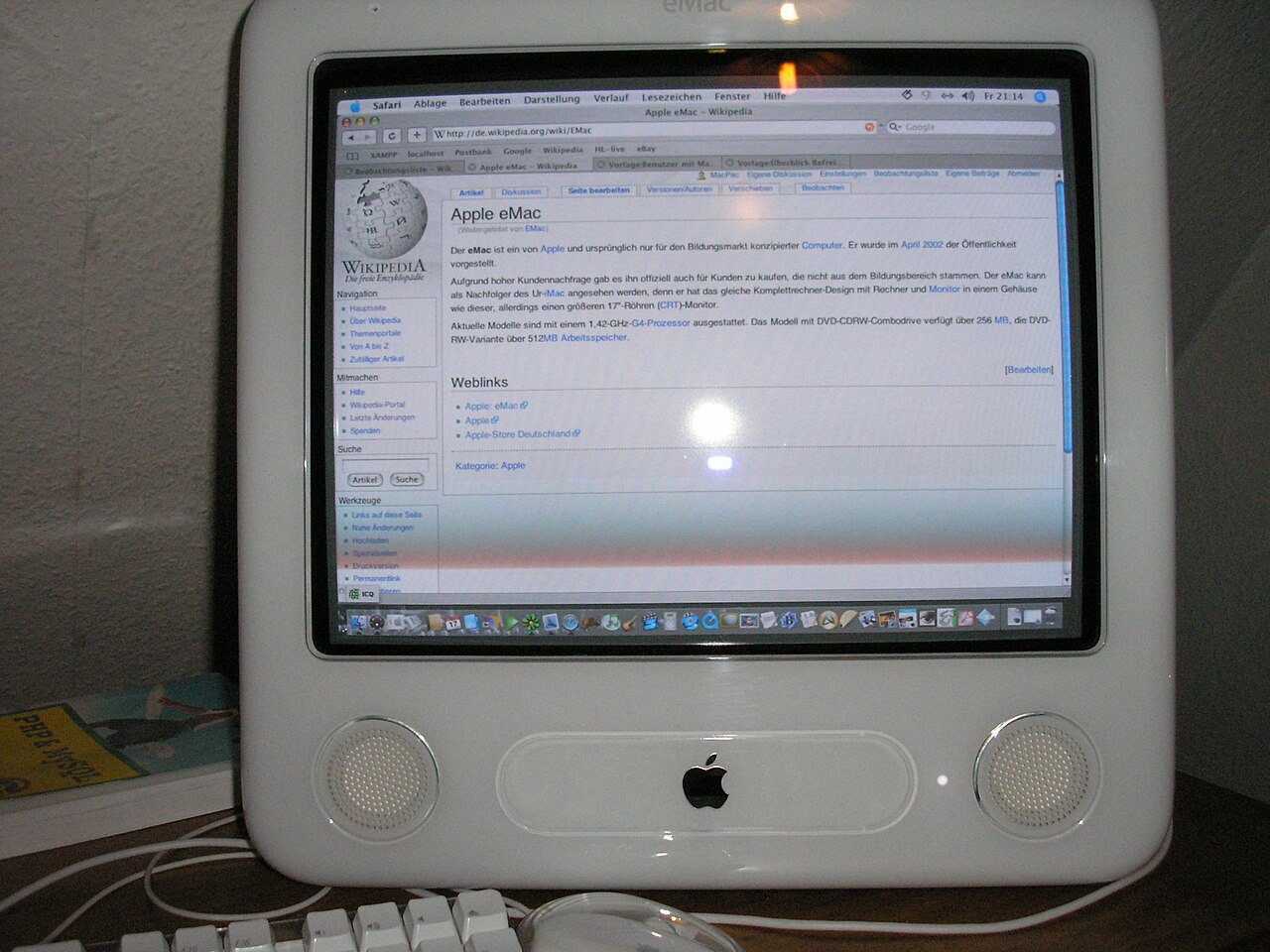
Picture this: 2006. You're in a school computer lab somewhere in suburban America. The monitor is a chunky eMac or maybe a beige Dell tower. The room smells like a combination of hand sanitizer and that mysterious scent that only exists in school buildings. You and three other kids are hunched over your keyboards, and your penguin avatars are ice fishing, decorating igloos, and throwing snowballs at each other in a place called Club Penguin. The bell hasn't rung yet. Your teacher isn't even looking. For a brief, perfect moment before lunch detention exists, you're genuinely engaged with something happening on the internet that doesn't involve clicking through banner ads or navigating the hostile wilderness of early 2000s web forums.
This scene played out millions of times in the mid-2000s, becoming a genuine cultural touchstone for an entire generation of kids. Club Penguin wasn't supposed to be huge. It wasn't some elaborate experiment by a major tech company or a calculated venture-backed startup with a five-year plan. It was, by many measures, an accident. A beautiful, profitable accident that would eventually sell for $350 million to Disney, reach over 200 million registered accounts, define what online childhood looked like for Gen Z, and then disappear almost entirely by 2017. What makes the Club Penguin story fascinating isn't just how it became a phenomenon, but why it fell apart so thoroughly, and what that tells us about corporate acquisitions, the expectations placed on beloved properties, and how quickly childhood memories can be erased when a balance sheet demands it.
How Three Guys in Canada Created a Global Phenomenon
The story begins not with Club Penguin, but with something called Penguin Chat. In the early 2000s, Lance Priebe, a developer from Kelowna, British Columbia, built a simple Flash-based chatroom with a twist: instead of just text, users got penguin avatars they could move around a virtual space. It was rough, it was basic, but it proved something important. Kids wanted to hang out online in a visual environment, not just type at each other.
Priebe teamed up with Lane Merrifield and Dave Krysko to form a company called New Horizon Interactive. Merrifield handled sales and marketing. Krysko covered expenses and business planning. Priebe built the product. Together, they decided to rebuild the Penguin Chat concept from the ground up. They wanted something cleaner, something designed specifically for children, something that parents wouldn't freak out about because it actually had safety mechanisms built in. They called it Club Penguin, and they spent months obsessing over the details. The penguin avatars needed to have personality. The world needed to be colorful and inviting. There needed to be things to do beyond just chatting, because chatting alone was boring and potentially dangerous for kids.
What they built was the online equivalent of a perfectly designed public park for kids. There were spaces to hang out in, things to interact with, social structures that rewarded being present and participating. Your penguin had an igloo that you could decorate with furniture you bought or earned. You could catch fish and play simple games. There was a currency system that made sense, a progression that felt real without being overwhelming. And crucially, there were other people, which meant the place felt alive. Club Penguin launched on October 24, 2005, and within weeks, kids started telling their friends about this weird place where you could be a penguin and live in the Arctic with thousands of other kids.
The Secret Sauce: Why Club Penguin Actually Worked
Here's the thing about Club Penguin that people who weren't there often misunderstand: it wasn't just a chatroom where you could see other people. It was a genuine virtual space with intentional design decisions that made it feel like a real place. The geography mattered. You walked between rooms. You could see other penguins on your screen at the same time you were there. The social hierarchy was visible but not brutal. You could be whoever you wanted to be, which for a 10-year-old kid is genuinely liberating. Nobody cared what school you went to or what your real name was or what brand of shoes you were wearing.
The membership model was also genius. Club Penguin offered a free-to-play experience that was genuinely enjoyable, but membership unlocked cosmetic items that made your penguin look cooler and gave you access to exclusive rooms and games. This wasn't exploitative, at least not by modern standards. The free experience was complete. Your parents could let you play without spending money, but if you begged hard enough, they might pay for a month of membership. This is the monetization model that actually works because it's based on creating genuine desire, not on creating artificial scarcity or pay-to-win mechanics.
The social events were also crucial. Club Penguin held parties. Real, organized parties with specific themes that happened on specific days. You could only experience certain things at certain times, which created urgency and community. The Valentine's Day party. The Halloween party. The Christmas party. These weren't just in-game cosmetics. They were gatherings. They were the digital equivalent of a town square where something was actually happening right now. If you missed it, you missed it, and you'd have to wait until next year. This FOMO, to use a term that wouldn't be coined until much later, was actually a feature, not a bug. It made people come back.
And then there were the puffles. These were small, round creatures that you could adopt as pets. They had personalities. They could grow and evolve. You had to feed them and play with them. This was the hook that made Club Penguin less of a chatroom and more of a life simulation game. Your puffle was depending on you. Kids would log in specifically to take care of their puffles, and while they were there, they'd hang out with their friends. The game also introduced Card-Jitsu, a simple card-based battle system that had surprising depth and became genuinely competitive among the hardcore players. Suddenly, Club Penguin wasn't just a place you went to chat. It was a place you went to live.
When Disney Showed Up With $350 Million
Disney acquired Club Penguin in August 2007, and the price tag shocked the gaming industry: $350 million in cash, with an additional $350 million potentially coming through performance bonuses if specific targets were met by 2009. For a game that had only been running for two years and was created by three guys in Kelowna, this was enormous. At the time of the acquisition, Club Penguin had roughly 12 million accounts, with about 700,000 paid subscribers generating around $40 million in annual revenue. Disney had just paid attention to something that the rest of the mainstream media had mostly ignored: kids were spending real time online, and they were willing to pay money for digital experiences.
For a brief moment, this acquisition felt like a victory. A Canadian indie success story had caught the eye of the biggest entertainment company on the planet, and the founders would make bank. Disney, meanwhile, seemed to understand what they had. They didn't come in and immediately gut the game or change its culture. They poured money into expansion and marketing. Club Penguin's user base exploded. By 2013, the game had surpassed 200 million registered accounts. Imagine that: two hundred million kids had created penguin avatars and walked through the digital ice at some point. Server capacity became a genuine issue. Disney had to continuously upgrade infrastructure just to handle the load.
The peak years of Club Penguin, roughly 2008 to 2012, were genuinely golden. The game had a real economy, a real community, and a real sense of place. Fan sites exploded. Kids wrote stories about their penguins. There was fan art. There were kids who spent hours every day playing, and it was actually socially acceptable to talk about Club Penguin at school because, unlike World of Warcraft, your parents had probably heard of it and didn't think it was weird. For a generation of kids, Club Penguin was the internet. It wasn't a game they played. It was where they lived.
The Long Decline Nobody Really Wants to Talk About
But here's the thing about internet culture, especially kid culture: nothing stays hot forever. Mobile gaming started exploding around 2010. Kids who had been playing Club Penguin on desktop computers started playing Angry Birds on iPhones instead. Attention spans shifted. Social media was emerging as the new place where kids wanted to hang out. Club Penguin's user numbers started sliding. Not dramatically at first, but noticeably. The growth had stalled by 2012, and by 2014, the game had started feeling less like the center of kid culture and more like something your parents had let you play three years ago.
Disney noticed this decline, and the response was to try modernizing the experience. But they didn't seem to understand that the aesthetic of Club Penguin wasn't a bug that needed to be fixed. The simplicity, the flat graphics, the slightly retro feeling of the whole thing: this was the point. It was charming. It was accessible. It made kids feel like they were part of something genuine rather than part of a corporate product.
More importantly, Disney also seemed to fundamentally misunderstand why Club Penguin had worked in the first place. They thought the magic was in the IP and the mechanics. What they were missing was the community and the continuity. You couldn't just shut down the old Club Penguin and move everyone to a new version. That's not how attachment works. That's not how community works. The old Club Penguin, with all its rough edges and technical limitations, was the place where the memories lived. A new version, no matter how pretty, would always feel like an imitation.
The Shutdown and the Funeral Nobody Expected
On January 30, 2017, Disney announced that Club Penguin would be shutting down on March 29, 2017. Twelve years of memories were being deleted, and players had less than two months to say goodbye. No long, gradual wind-down. Just: here's the date, come say goodbye if you want, then we're turning off the servers.
What happened next was beautiful and heartbreaking in equal measure. Kids from around the world logged in for the final party. Thousands of penguins, all crowded into the town center, mostly just standing there. Some were chatting. Some were taking screenshots. Some were probably just sitting in their bedrooms crying, though you couldn't see that on screen. It was like watching the final episode of a show that had defined your childhood, except you didn't get multiple seasons to say goodbye. You got about eight weeks. The final moments before the servers shut down on March 30, 2017 were absolute chaos: so many penguins trying to be in the same space that the game started having trouble rendering everyone.
And then it was gone. All 200 million accounts. All the igloos you had decorated. All the puffles you had raised. All the memories of the parties you had attended. All the friendships you had made with people you'd never met in real life. Deleted. Not archived. Not preserved. Just gone.
Club Penguin Island: When Disney Really Lost the Plot
And here's where it gets interesting, and also where it gets frustrating. Disney didn't retire the Club Penguin IP. Instead, on the very same day the original game closed, they launched Club Penguin Island, a mobile-first remake that was supposed to be the future of the franchise. It was completely separate from the original game. It had new graphics. It was optimized for touchscreens. It was, by all accounts, a perfectly functional mobile game.
It was also a complete failure. Kids didn't want Club Penguin on their phones. They wanted Club Penguin, the actual place they had spent years of their childhoods. The new version felt soulless and corporate in comparison. It was designed by people who understood game design but didn't understand the actual magic of why Club Penguin had mattered. Worst of all, Club Penguin Island was exclusively available on mobile, which meant that parents couldn't just let their kids play it on a family computer anymore. It required an app download and a login system that was more complicated than the original.
Club Penguin Island limped along for less than two years. On September 27, 2018, Disney announced that it too would be shutting down, with servers going offline on December 20, 2018. Twice in less than two years, Club Penguin players were told that their game was being deleted. The second time felt almost like a punchline. You couldn't even preserve the new version as a backup or a replacement for the original because it didn't offer anything of value that the original hadn't. It was just gone, again.
The Fan-Run Clones and Disney's Legal Awakening
But here's what Disney didn't count on: the internet doesn't forget, and passionate communities don't give up. Almost immediately after Club Penguin shut down, fans started creating their own versions. The most famous is probably Club Penguin Rewritten, which launched in 2017 and was built by fans who had actually studied how the original game functioned. It wasn't a perfect recreation, but it was close enough that thousands of people returned to it. They wanted their memories back. They wanted to feel like they were part of Club Penguin again, even if it was an unofficial imitation.
Disney was not happy about this. The company sent cease and desist letters. They pursued legal action against the fan-run servers. In 2022, Club Penguin Rewritten was shut down after a criminal investigation. But here's the thing about trying to kill something that the internet has decided to resurrect: you can't stamp it out entirely. For every official takedown, more versions popped up. New private servers emerged. The community kept finding ways to keep the spirit of Club Penguin alive, even as Disney's lawyers worked overtime to shut them down.
The existence of these fan servers raises a genuine question about digital ownership and preservation. Club Penguin was a cultural artifact for an entire generation. It was something that shaped how kids understood online community and virtual spaces. Yet Disney, which owned the IP, decided to delete it entirely rather than preserve it in any form. The fans had to step in and do the preservation work themselves. This is part of a larger problem with digital media: when companies own everything, and those companies decide that something isn't profitable anymore, that thing simply ceases to exist. There's no archive. There's no museum. There's just a void.
The Legacy: What Club Penguin Actually Meant
So what is Club Penguin's actual legacy? For one thing, it proved that you didn't need cutting-edge graphics or massive budgets to create something that kids cared about. The simplicity of Club Penguin was a feature, not a limitation. It made the game accessible and charming in a way that a more technically impressive game might not have been.
Club Penguin also created a template for what a safe, moderated online space for kids could look like. The game had real moderation. Real consequences for behavior that violated community standards. Adults weren't trolling kids in Club Penguin because Disney had invested in actual human moderation. Compare this to modern platforms where algorithms do the moderation and the result is chaos. Club Penguin proved that you could have a genuine community of kids online without turning it into a hellscape.
But perhaps the most important legacy is the one that Disney seems most determined to forget: that digital experiences matter to people, and that erasing them has real emotional consequences. There are adults now in their twenties and thirties who grew up on Club Penguin and still think about it. They remember specific moments, specific friends they made online, specific achievements in the game. These memories are real, even if the place they happened no longer exists. By completely deleting Club Penguin instead of preserving it in some form, Disney erased a piece of cultural history.
Club Penguin was, ultimately, an accident. It wasn't supposed to become this huge thing. It wasn't supposed to define a generation's online experience. But it did, and for about five or six years, it was genuinely magical. Kids from around the world met each other in a virtual Arctic, decorated igloos, played card games, raised digital pets, and felt like they were part of something real and meaningful. That mattered. That was important. And the fact that it's gone now doesn't change the fact that it happened or that it meant something.
Frequently Asked Questions
When did Club Penguin shut down?
Club Penguin's servers went offline on March 30, 2017, after Disney announced the closure on January 30, 2017. There was a final farewell party before the servers were permanently taken down. Disney did not preserve or archive the game in any official capacity.
Why did Disney shut down Club Penguin?
Disney never gave a single detailed explanation, but the primary reason was declining user numbers and revenue. The game's popularity had peaked around 2010 to 2012, and by 2017, it was generating less revenue than Disney considered worthwhile to maintain. Disney also wanted to redirect resources toward Club Penguin Island, its mobile replacement, which itself shut down in December 2018.
How many people played Club Penguin?
By 2013, Club Penguin had surpassed 200 million registered accounts. At the time of Disney's acquisition in 2007, the game had about 12 million accounts with roughly 700,000 paid subscribers. Not all registered accounts were active simultaneously, and many players created multiple accounts.
How much did Disney pay for Club Penguin?
Disney paid $350 million in cash to acquire Club Penguin in August 2007, with up to an additional $350 million in performance-based bonuses tied to meeting specific growth targets by 2009. The total potential deal value was $700 million.
Was Club Penguin Island any good?
Club Penguin Island was a competent mobile game, but it was not the experience that longtime Club Penguin players wanted. It felt disconnected from what made the original game special. It launched on March 29, 2017, the same day the original Club Penguin closed, and shut down on December 20, 2018, lasting less than two years.
Can I still play Club Penguin anywhere?
There are fan-created private servers that attempt to recreate the Club Penguin experience. However, these are unofficial and operate in a legal gray area. Disney has actively pursued legal action against some of the larger fan projects, including Club Penguin Rewritten, which was shut down in 2022. Any remaining fan servers could theoretically be taken down at any time.
Did Club Penguin have any cultural impact?
Yes, significant cultural impact. For an entire generation of kids growing up in the 2000s, Club Penguin was their introduction to online community, virtual worlds, and persistent multiplayer experiences. It shaped expectations for what online spaces could be and influenced how moderated, safe digital environments for children were designed.
Who created Club Penguin?
Club Penguin was created by Lance Priebe, Lane Merrifield, and Dave Krysko through their company New Horizon Interactive, based in Kelowna, British Columbia, Canada. Priebe was the lead developer who had previously created Penguin Chat, while Merrifield handled sales and marketing, and Krysko managed business operations.