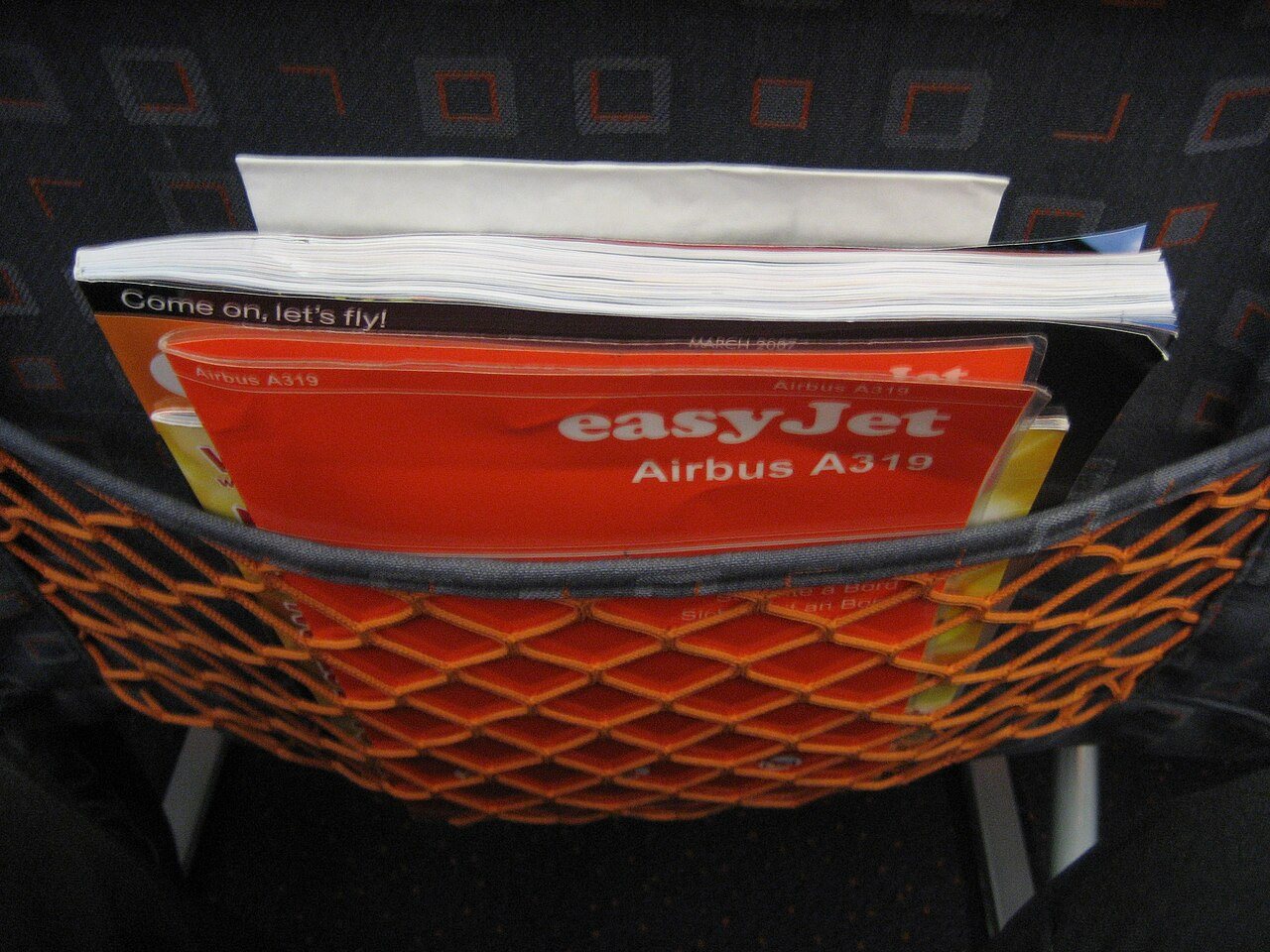
Who put the first catalog in a seat pocket?
Robert Worsley was an accountant at Price Waterhouse when the idea arrived on a flight in 1989. He was paging through the Giftmaster catalog in the seat pocket in front of him and decided the merchandise was terrible.
Worsley incorporated SkyMall in Arizona and mailed a 100-page business plan to 50 venture capitalists and individual investors. In February 1990, Alan Ashton, the co-creator of WordPerfect, agreed to finance it with $250,000.
Getting started cost nearly $3 million. That money bought a 21,000-square-foot warehouse in Phoenix and a customer service center running NeXT computers and Sun Microsystems servers, which in 1990 was serious equipment for a mail-order startup.
The first SkyMall catalog went out on Eastern Airlines in 1990. It carried goods from Hammacher Schlemmer, Spiegel, The Nature Company, The Wine Enthusiast and Bits and Pieces, which SkyMall bought at a 35 percent discount and resold at list.
Revenue in that first year was $200,000. The reach was real and the economics were not, which is a sentence that also fits Pets.com a decade later.
How did SkyMall get into almost every airline?
Once the first carrier signed, the rest came quickly. TWA began carrying the catalog in February 1991 and Continental Airlines added it that April. July 1991 was the flood: Alaska, Atlantic Southeast, Delta, Horizon, SkyWest and USAir all started carrying SkyMall in the same month.
The deal was easy for an airline to say yes to. Carriers were paid a percentage of what SkyMall sold, so the catalog cost them nothing up front.
The complication was weight. Early editions ran 60 to 80 pages, and paper burns jet fuel. When the sales commissions did not cover the difference, SkyMall paid the airlines for the extra fuel their catalogs consumed.
Revenue reached $5.4 million in 1991. The company was also losing about half a million dollars a month at the time.
That pairing of enormous distribution and thin margins defined SkyMall for the next 25 years. It sat in front of more American shoppers than most department store chains and still had to argue about postage and fuel surcharges.
What did people actually buy from it?
SkyMall's reputation came from the strange end of the catalog: the life-size garden yeti, the dog staircases, the gadgets that solved problems nobody had. Those pages are the reason anyone remembers the brand at all.
The everyday business was duller. SkyMall resold merchandise from established catalog houses such as Hammacher Schlemmer and Spiegel, buying at a discount and keeping the spread.
The gap between reading and buying is the whole story, and the man who eventually bought the brand said so out loud. Chaim Pikarski of C&A Marketing told CNN Money in 2015: "Even in the past when people did read SkyMall in-flight, they read it as entertainment. It was not a call to action to buy."
That is an unusual thing for an owner to say about his own asset. It also explains why a catalog with that much reach never converted like one that arrives at a house.
Catalog retailers that owned their customer lists learned the same lesson from the other side. Montgomery Ward built a century of sales on a book a household asked for, not one a traveler met by accident.
Who owned SkyMall before the bankruptcy?
SkyMall did not stay independent. On July 18, 2001, Gemstar-TV Guide International acquired all of SkyMall's outstanding common stock.
Gemstar's later annual report to the Securities and Exchange Commission put the aggregate purchase price at $50.1 million, made up of $22.2 million in cash and roughly 741,000 Gemstar shares valued at $36.58 each. SkyMall shareholders received $1.50 and 0.03759 of a Gemstar share for every share they held.
That $50.1 million is the figure to remember. Fourteen years later the entire business, brand included, changed hands for under four percent of it.
Ownership kept moving after 2001, and every owner inherited the same structural weakness. SkyMall's audience was rented from the airlines. There were no subscribers, only passengers, and they stayed only as long as the carriers kept signing contracts.
A catalog business that controls its own mailing list can survive a bad year. Sears mailed to names it owned for most of a century. SkyMall never owned a name until a customer placed an order, and most passengers never did.
Why did SkyMall go bankrupt in 2015?
Phones finished it. SkyMall's revenue fell from $33.7 million in 2013 to $15.8 million for the nine months ending in September 2014.
Acting chief executive Scott Wiley put the cause into the company's 2015 court filings without decoration: "With the increased use of electronic devices on planes, fewer people browsed the SkyMall in-flight catalog."
The carriers moved before the creditors did. Delta Air Lines ended its SkyMall contract on November 30, 2014. Southwest Airlines told the company it would stop carrying the catalog after April 1, 2015.
Losing two airlines that size gutted the distribution SkyMall's merchants were paying for. SkyMall filed for Chapter 11 protection on January 23, 2015.
The collapse looks abrupt in the headlines and was not. Seat-back screens, in-flight wifi and a phone loaded with downloaded video had spent years eating the catalog's only real asset, which was a bored passenger with nothing else to look at. Once regulators let travelers keep their devices switched on from gate to gate, even the taxi and takeoff minutes belonged to the phone.
Who bought the brand, and what is it now?
The assets went to auction in Phoenix in March 2015. Seven bidders prequalified and only two put in an offer.
FSG Distributors bid $2.5 million. C&A Marketing bid $1.9 million and won anyway, because its offer carried far fewer contingencies. An Arizona bankruptcy judge approved the sale on March 27, 2015.
C&A Marketing, a New Jersey consumer products company, still owns SkyMall and runs it as an online store at skymall.com. It sells gadgets, home goods and travel gear to people who go looking for them, which is the opposite of the original model.
Print did come back, briefly. In October 2015 SkyMall returned as an insert inside United Airlines' in-flight magazine, Hemispheres, and the company followed with a 36-page holiday edition mailed to its best customers.
Pikarski described the new plan to CNN Money in 2015: "The way you run a catalog business is by mailing them to people or by engaging them in e-commerce." SkyMall in 2026 is the e-commerce half of that sentence. The seat pocket version is finished, and so are most of the airline magazines that used to sit beside it.
Where to find a SkyMall catalog today
Old SkyMall issues are ephemera rather than collectibles, so they trade for about what a used paperback costs rather than what a rarity costs. Sellers usually list them by year and by airline edition, and condition is the only thing that really moves the price. For a copy to keep, browse the vintage SkyMall catalog listings on Etsy. For a copy to read, the Internet Archive has scanned full editions from the catalog's final years.
Frequently Asked Questions
Is SkyMall still in business in 2026?
Yes. SkyMall exists in 2026 as an online store at skymall.com, owned by the New Jersey consumer products company C&A Marketing, which bought the brand out of bankruptcy in 2015. What no longer exists is the standalone SkyMall catalog that sat in airline seat pockets from 1990 until the Chapter 11 filing in January 2015.
Why did SkyMall go bankrupt?
SkyMall filed for Chapter 11 bankruptcy protection on January 23, 2015, after revenue fell from $33.7 million in 2013 to $15.8 million in the nine months ending September 2014. Passengers spent flights on phones and tablets instead of the seat-pocket catalog, and Delta Air Lines ended its SkyMall contract on November 30, 2014, with Southwest Airlines dropping it after April 1, 2015.
How much did SkyMall sell for?
C&A Marketing bought the SkyMall assets for $1.9 million at a bankruptcy auction, a sale an Arizona judge approved on March 27, 2015. That is a steep markdown from 2001, when Gemstar-TV Guide International paid an aggregate $50.1 million for SkyMall's outstanding stock.