What is still running under the Netscape name?
One web page and one trademark. Netscape Communications stopped existing as an independent business on March 17, 1999, the day AOL closed its acquisition, and AOL ended support for every Netscape browser product on March 1, 2008.
The brand outlasted the software because AOL attached it to a discount dial-up service. Netscape Internet Service launched on January 8, 2004 at $9.95 a month for unlimited access, and AOL discontinued it on November 30, 2025, two months after shutting down AOL dial-up itself. Subscribers kept their netscape.net and netscape.com email addresses, which now run through AOL Mail at no charge. The wider collapse of that market is covered in what is left of dial-up internet.
The page that survives is isp.netscape.com, a news aggregator wearing the Netscape ISP logo with headlines pulled from AOL feeds. At the bottom sits a "Download Browser" link. It installs a Chromium fork built for AOL by the UK security firm SentryBay, the same code AOL has shipped as AOL Shield, with AOL Search wired in as the default. It shares nothing with the browser released in 1994 except six letters.
Who owns the Netscape name today?
Bending Spoons S.p.A., by way of AOL. Yahoo, controlled by Apollo Global Management, agreed in October 2025 to sell the AOL business to the Milan software group, and Bending Spoons told the US Securities and Exchange Commission that it acquired AOL Holdco I LLC on January 2, 2026 for total cash consideration of about $1.45 billion.
The same filing describes what came with it: around 8 million daily and 30 million monthly active users, concentrated in email, news and search. Netscape is a line item inside that portfolio rather than a product with a roadmap, which is how AOL has treated the name since it wound down AOL Instant Messenger.
The trademark file shows somebody still pays the maintenance bills. US Registration No. 2027552 for the word mark NETSCAPE, filed September 15, 1994 and registered December 31, 1996, is listed by the USPTO as registered and renewed. Trademark databases still name Yahoo Inc. as owner of record, because assignment paperwork lags a corporate sale by months. Either way the registration is live, and a live mark is why nobody else can launch a browser called Netscape.
What did AOL actually buy in 1999?
AOL announced the deal on November 24, 1998 as a tax-free stock swap valued at $4.2 billion, roughly a tenth of AOL's market value at the time. AOL shares kept climbing through the regulatory review, so by the closing on March 17, 1999 the transaction was worth about $10 billion. Netscape shareholders were paid in AOL stock, not cash, which is why the price moved so far between the handshake and the close.
The deal landed in the middle of the government's antitrust case against Microsoft, and Netscape's chief executive pushed back on the obvious reading. "Netscape is doing this because it's in the best interests of Netscape. This is not about the [Microsoft] case," James Barksdale told reporters on the announcement call, as recorded by Tech Law Journal in 1998.
The headline number hid what AOL was shopping for. Netscape's browser share was already collapsing, the fight covered in the browser war Netscape lost to Internet Explorer. The assets with revenue attached were Netcenter, then one of the busiest portals on the web, and Netscape's enterprise server software. AOL split them up, pushed the server business into an alliance with Sun Microsystems, fed the portal into its own traffic machine, and gave the browser the smallest budget. On July 15, 2003 it disbanded what was left of the Netscape division and laid off or reassigned the staff.
Why did AOL stop making the browser?
Because almost nobody was using it, and the releases kept making that worse. Netscape 6 arrived on November 14, 2000 built on Mozilla 0.6, a codebase neither engineering team considered ready, and it shipped with crashes and slow page rendering that burned whatever goodwill was left. Netscape 7 followed in 2002, and version 7.2 on August 17, 2004 was the last built on the old Mozilla suite.
Then AOL outsourced. Netscape Browser 8, released between 2005 and 2007, was Windows only and built on Firefox. Netscape Navigator 9 launched on October 15, 2007 on top of Firefox 2, and the final build, 9.0.0.6, shipped on February 20, 2008.
The measurements explain the decision. Net Applications put Internet Explorer at 77.4 percent of the browser market in November 2007, with Netscape below 1 percent.
AOL announced the end on December 28, 2007, set the cutoff at February 1, 2008, then moved it to March 1, 2008 to allow one last security update and a tool to move users off. "We feel it's the right time to end development of Netscape branded browsers, hand the reins fully to Mozilla, and encourage Netscape users to adopt Firefox," wrote Tom Drapeau, the AOL director responsible for Netscape, on the Netscape blog in 2007.
How did Mozilla outlive the company that started it?
The most valuable thing Netscape did in its final independent stretch was give the code away. It announced on January 22, 1998 that the source of Communicator would be free to modify and redistribute, set up mozilla.org in February 1998 to coordinate the work, and shipped the first developer release on March 31, 1998 after an internal sprint named Project Source 331.
That project rewrote the browser around the Gecko rendering engine. On July 15, 2003, the same day AOL disbanded the Netscape division, the Mozilla Foundation launched as an independent nonprofit staffed largely by former Netscape engineers, with $2 million from AOL over two years plus hardware and intellectual property.
Gecko still powers Firefox. So the honest answer to what replaced Netscape is not a rival that beat it but a nonprofit that inherited its code and its people, funded on the way out by the company that had bought them. AOL paid roughly $10 billion for a browser and ended up paying the moving costs of the only part of it that lasted. It was not the last time AOL turned a famous name into a write-down: the AOL and Time Warner merger announced in January 2000 repeated the pattern at far greater scale.
Where to find a piece of Netscape today
The software costs nothing. The Internet Archive hosts a Netscape browser collection with the old installers, and they run inside a virtual machine on a retired copy of Windows, which is the only safe way to point 1990s code at the modern web.
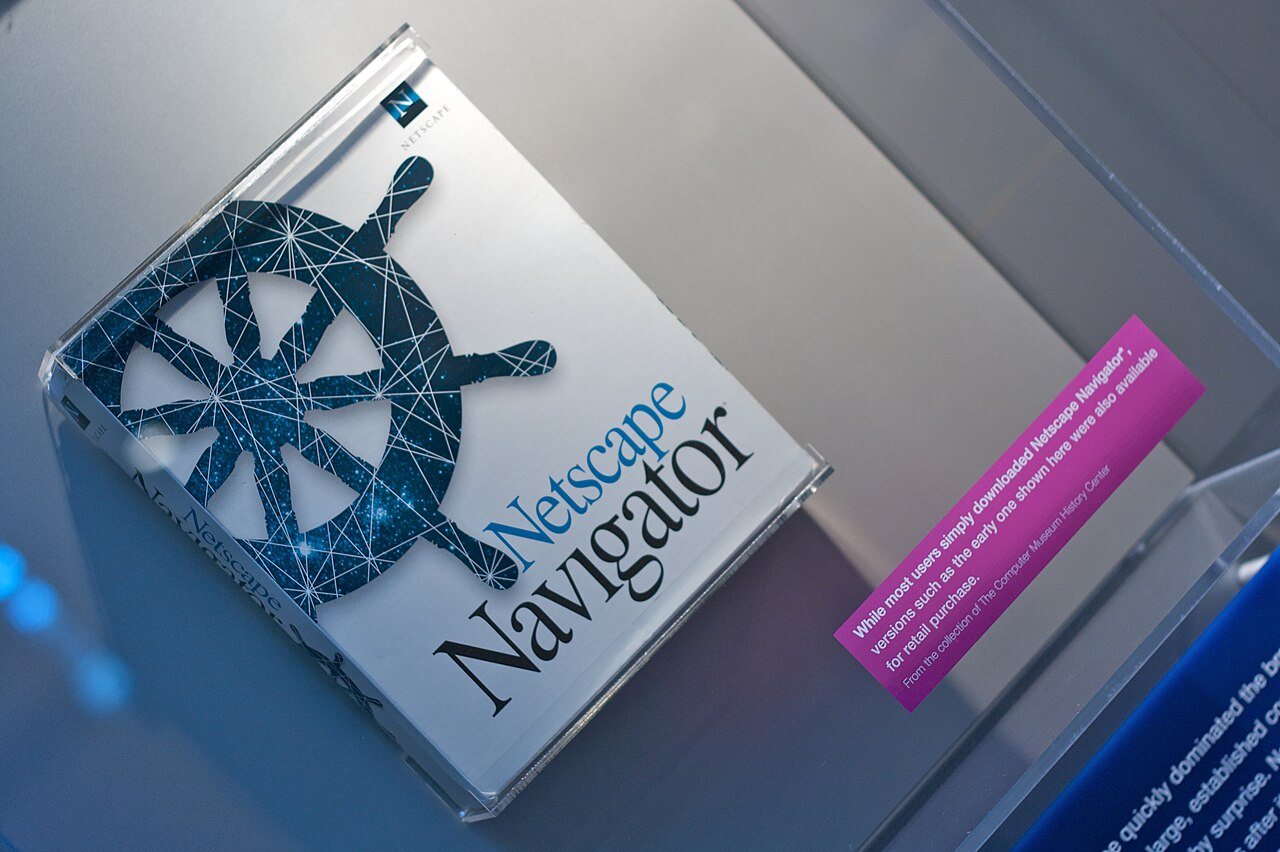
What actually trades is the packaging: shrink-wrapped Navigator and Communicator big boxes, the printed manuals, the promotional shirts and caps from the Mountain View years. Vintage sellers on Etsy list them under Netscape, and the condition of the box, not the disc, is what collectors argue about.
Frequently Asked Questions
Does Netscape still exist?
Netscape does not exist as a company or a supported browser. Netscape Communications ceased to be independent when AOL completed its acquisition on March 17, 1999, AOL disbanded the Netscape division on July 15, 2003, and browser support ended on March 1, 2008. Only the trademark and one AOL web page still carry the name in 2026.
Who owns Netscape now?
The Netscape brand belongs to AOL, and AOL was bought by the Italian software group Bending Spoons, which reported completing the purchase on January 2, 2026 for about $1.45 billion in cash. The US trademark registration for NETSCAPE, No. 2027552 from December 31, 1996, remains registered and renewed.
Can you still download the Netscape browser?
A Chromium-based browser carrying the Netscape name can still be downloaded from the old Netscape ISP page, but it is not the original software. The real Netscape browser has been unsupported since March 1, 2008, and its last build, Netscape Navigator 9.0.0.6, dates from February 20, 2008.