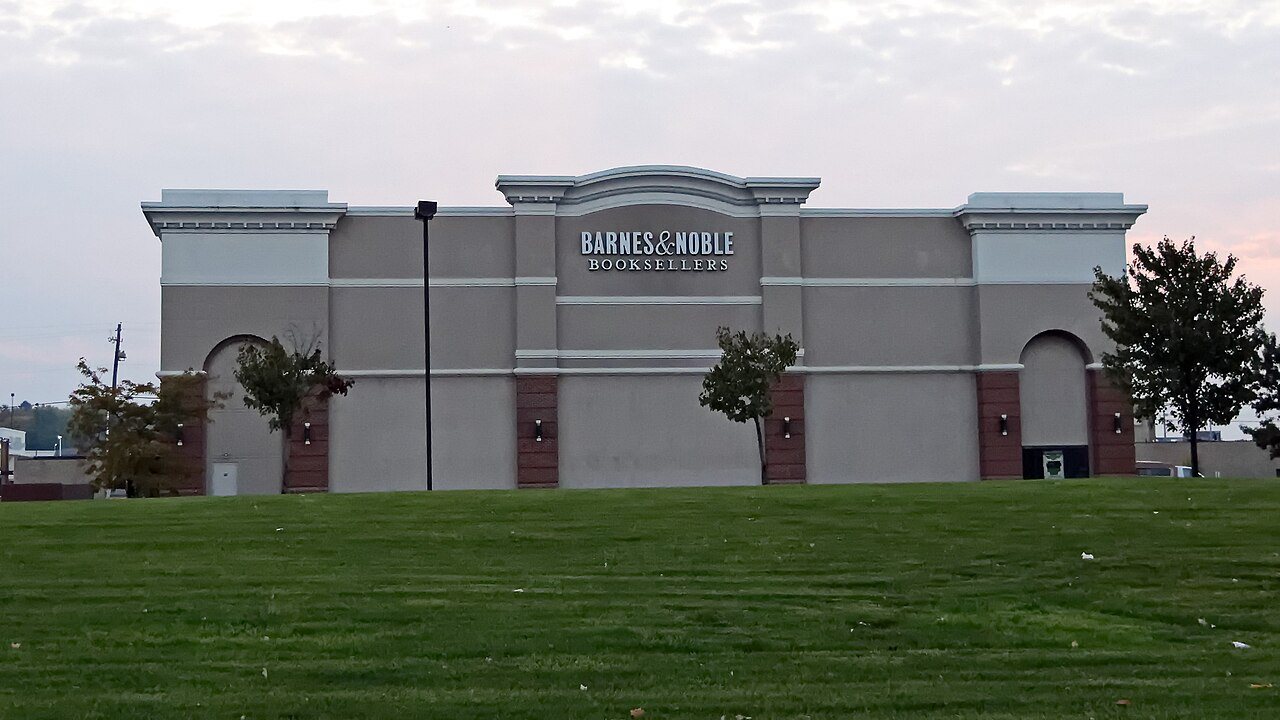
The chain that was supposed to go the way of Borders
For most of the 2010s, the safe prediction about Barnes & Noble was that it would not make it through the decade.
Borders, the other big American bookstore chain, ran out of road first. It filed for bankruptcy protection in February 2011, failed to find a buyer, and on July 18, 2011 said it would liquidate. Borders still operated 399 stores and employed about 10,700 people on the day that decision was announced, and the last of those stores were gone by the end of September.
Barnes & Noble looked like the next name on the list. Amazon had taken the price argument, then the selection argument, then the convenience argument, and the chain spent more than 15 years closing stores rather than opening them.
That is the part most people remember, and it is why the question gets typed into a search box at all. The 2026 answer is not the one the 2011 headlines set up. Barnes & Noble is open, it runs more stores than it did five years ago, and it is the rare mall-era American retailer adding locations instead of shedding them. The last Blockbuster is one store in Oregon. Barnes & Noble has hundreds.
How many Barnes & Noble stores are open in 2026?
More than 720, in every part of the country. The chain passed that mark in 2026 after falling below 600 stores as recently as 2023.
The growth is not a rounding error either. Barnes & Noble has opened roughly 28 bookstores since the start of 2026, spread across 15 states and Washington, DC, and says dozens more are due before the end of the year.
The target for 2026, announced in December 2025, is 60 new stores. Leases were confirmed in nine states plus the District of Columbia: California, Colorado, Florida, Georgia, Illinois, Ohio, Texas, Virginia and Washington state, along with Washington, DC.
"Barnes & Noble is enjoying a period of tremendous growth as the strategy to hand control of each bookstore to its local booksellers has proven so successful," the company said in the statement to Fox Business announcing those openings.
The same statement made the contrast explicit: sales are strong in the stores the chain already has, and the openings follow more than 15 years of declining store numbers. For a reader checking whether the branch they remember is still trading, the short version is that Barnes & Noble is opening bookstores rather than closing them for the first time in a generation.
Who owns Barnes & Noble now?
Elliott Investment Management, the activist investment firm, has owned Barnes & Noble since 2019.
The deal was announced on June 7, 2019: $6.50 a share in cash, valuing the bookseller at about $683 million including debt. That price was a 43 percent premium to the volume weighted average closing price over the ten trading days to June 5, 2019, which says plenty about what the market thought the chain was worth by then. The purchase closed that August.
Elliott already owned Waterstones, the largest bookstore chain in the United Kingdom, bought in 2018. Putting the two chains under one owner also put them under one bookseller: James Daunt, who ran Waterstones, took the chief executive job at Barnes & Noble as well and still holds both.
Ownership matters more than usual in this story. An investment firm buying a fading retailer is normally the opening scene of a liquidation, the way it went at Kmart and Sears. Elliott kept the stores and changed how they were run instead.
What James Daunt changed inside the stores
Daunt's repair job was not an app or a loyalty scheme. It was taking buying decisions away from head office and handing them to the people standing in the shop.
Under the old system, publishers paid for placement and a central team decided what every store in the country piled up by the front door. Under Daunt, individual stores pick much of what they stock and how it is displayed, which is why two Barnes & Noble branches in the same state no longer look identical.
"We are trying to run really good bookstores, most of that effort is being done at the local level," Daunt told Fortune in 2026. His stated principle is shorter still: "bookselling is local."
The change showed up in the accounts before it showed up in the store count. Daunt closed weak locations, cleared out the clutter that had crept into the floor plans, and led Barnes & Noble to its first year of profit since the 2008 recession, according to Fortune's August 2026 account of the turnaround. The leases came after that, not before.
By 2026 the company is on course to operate more locations than it had in 2019, the year it was sold.
Why the bookstore business itself came back
Barnes & Noble is not growing against the market. It is growing with one.
Independent bookshops are multiplying too. Some 605 new independent bookstores opened in the United States in 2025, up 87 percent on the year before, according to American Booksellers Association figures cited by Fortune in 2026.
Daunt does not treat those shops as the enemy, which is a reversal for a chain that spent the 1990s cast as the villain putting neighborhood bookstores out of business. "The better our bookstores, the more books are sold, the more the market expands," he told Fortune in 2026, arguing that "it's not a zero-sum game."
The rest of the answer is physical. A bookstore is one of the few shops left that people enter to spend an hour rather than to complete a transaction, and an hour is the thing a website cannot ship. Amazon still sells more books than anyone, and Amazon survived the dot-com crash partly by selling them cheaper than any store could. What it never built was somewhere to stand.
Frequently Asked Questions
Is Barnes & Noble going out of business?
No. Barnes & Noble is not going out of business in 2026. The chain runs more than 720 bookstores in the United States, has opened about 28 of them since January 2026, and has a target of 60 new stores for the year, having fallen below 600 stores as recently as 2023.
How many Barnes & Noble stores are left in 2026?
More than 720 across the United States in 2026, up from fewer than 600 in 2023. Barnes & Noble confirmed 2026 leases in nine states and Washington, DC, among them California, Colorado, Florida, Georgia, Illinois, Ohio, Texas, Virginia and Washington state.
Who owns Barnes & Noble now?
Elliott Investment Management has owned Barnes & Noble since 2019, under a deal announced on June 7, 2019 at $6.50 a share and worth about $683 million including debt. Elliott also owns the British chain Waterstones, and James Daunt has run both booksellers since the takeover.